How Does Digital Marketing Work for Healthcare Providers in Australia?
Discover how Australian healthcare providers can use SEO, Google Ads, content marketing, and social media to attract more patients, build trust, and grow their practice while staying compliant with AHPRA guidelines.
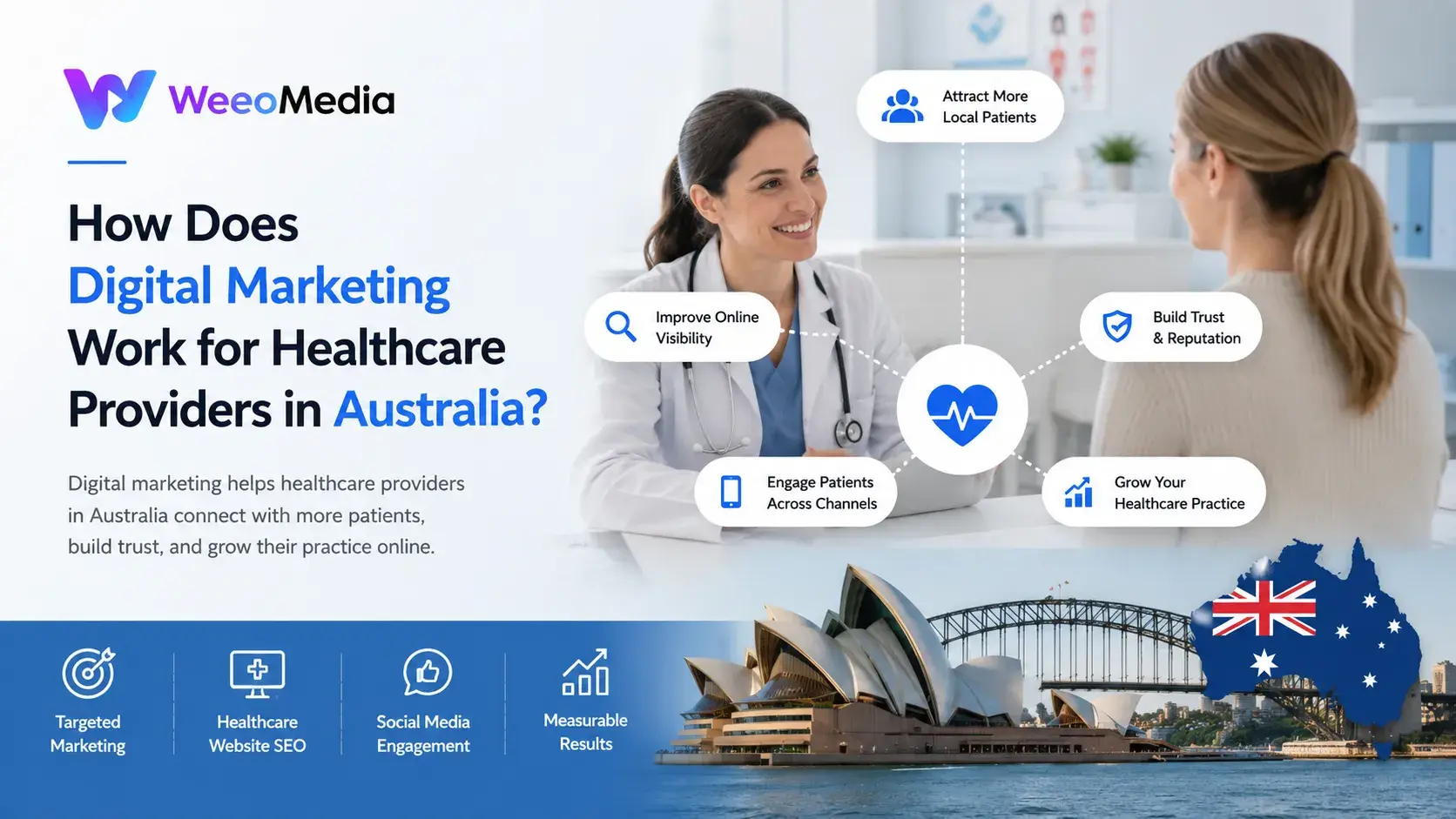
The healthcare industry in Australia is undergoing a significant digital transformation. Patients no longer rely solely on word-of-mouth referrals or printed directories to find a doctor, specialist, allied health provider, or medical clinic. They search on Google, read reviews, compare services, and book appointments online, often within minutes of identifying a need. For healthcare providers across Australia, this shift represents both a challenge and an extraordinary opportunity.
Digital marketing for healthcare is not simply about running ads or posting on social media. It is a structured, multi-channel approach to building visibility, establishing trust, educating patients, and generating a consistent flow of enquiries, all while operating within the strict ethical and regulatory guidelines that govern healthcare communication in Australia. When executed correctly, digital marketing for healthcare providers in Australia creates a powerful patient acquisition engine that works around the clock, reaching people at the exact moment they are searching for the services you provide.
This guide breaks down exactly how digital marketing works for Australian healthcare providers, which channels deliver the best results, and what a compliant, effective strategy looks like in practice.
The Digital Patient Journey in Australia
Before diving into tactics and channels, it is important to understand how Australian patients now behave when seeking healthcare. The journey typically begins with a search. A patient experiences a symptom, needs a check-up, requires a specialist referral, or is looking for a specific allied health service. Their first action in most cases is to open Google and type a query.
From that search, they evaluate the results that appear, read clinic websites, check Google reviews, look at social media profiles, and then decide whether to book an appointment or call for more information. In competitive healthcare markets like Sydney, Melbourne, Brisbane, and Perth, this journey can take anywhere from a few minutes to several days depending on the urgency and complexity of the healthcare need.
A healthcare provider with strong digital marketing in place will appear prominently at every stage of this journey, from the initial Google search to the final booking decision. A provider without a digital strategy will simply not be found by patients who are searching independently, regardless of how skilled or experienced their clinical team is.
Key Digital Marketing Channels for Healthcare Providers
Search Engine Optimisation for Healthcare
Healthcare SEO in Australia is the process of optimising a medical or allied health website so that it ranks highly in Google search results for queries relevant to your services, specialties, and location. For most healthcare providers, SEO is the single highest-value digital marketing channel available because it captures patients at the exact moment of active need.
When someone searches "cardiologist in Brisbane," "physiotherapy clinic near me," "bulk billing GP Sydney," or "child psychologist Melbourne," the practices that appear at the top of the organic results and in the Google Maps pack receive the overwhelming majority of clicks and enquiries. Achieving those positions requires a combination of on-page optimisation, technical website health, locally focused content, and a strong backlink profile.
Healthcare SEO is also subject to Google's concept of E-E-A-T, which stands for Experience, Expertise, Authoritativeness, and Trustworthiness. Google applies particularly high scrutiny to health-related content because it has the potential to directly impact a person's wellbeing. This means content published on healthcare websites must demonstrate genuine clinical expertise, be authored or reviewed by qualified practitioners, and cite credible sources. Thin, generic, or inaccurate health content will not only fail to rank, it can actively damage your website's authority.
Local SEO for Medical Clinics
For most healthcare providers, the patients they serve are located within a specific geographic area. A GP clinic in Parramatta is primarily competing for patients in the western Sydney suburbs. A dental practice in South Yarra is primarily targeting residents and workers in Melbourne's inner south.
Local SEO for medical clinics focuses specifically on improving visibility in location-based searches and the Google Maps results that appear for healthcare queries. This involves optimising your Google Business Profile with accurate and complete information, consistent NAP citations across medical directories and local business listings, a structured strategy for generating and responding to patient reviews, and locally focused content that signals your relevance to a specific geographic community.
For practices with multiple clinic locations, local SEO needs to be managed individually for each site, ensuring that each location has its own optimised Google Business Profile, its own location page on the website, and its own set of locally targeted keywords.
Content Marketing for Healthcare
Content marketing is one of the most powerful and sustainable tools available for patient acquisition through digital marketing. When healthcare providers consistently publish high-quality, accurate, and genuinely useful content on their websites, they build organic search visibility for hundreds of informational queries that potential patients are actively searching.
A physiotherapy clinic that publishes comprehensive articles on managing lower back pain, recovering from sports injuries, and understanding different treatment approaches will attract thousands of monthly visitors searching those exact topics on Google. A portion of those visitors will then explore the clinic's services and convert into new patients.
Effective healthcare content marketing is not about volume alone. It requires clinical accuracy, appropriate medical disclaimers, content authored or endorsed by qualified practitioners, and a clear alignment between the information provided and the services the practice offers. Content that genuinely educates patients builds trust before the first appointment, which significantly improves conversion rates and long-term patient retention.
Google Ads for Healthcare Providers
While SEO builds long-term organic visibility, Google Ads for healthcare providers in Australia delivers immediate, targeted visibility for high-priority services and locations. A healthcare practice launching a new service, opening a new location, or operating in a highly competitive market can use Google Ads to appear at the top of search results from day one, while the organic SEO strategy builds momentum in the background.
Google Ads for healthcare operates on a pay-per-click model, meaning you only pay when a potential patient actually clicks on your advertisement. Campaigns can be precisely targeted by keyword, location, time of day, and device type, giving you granular control over who sees your ads and when.
It is important to note that healthcare advertising in Australia is regulated by the Australian Health Practitioner Regulation Agency (AHPRA) and relevant state and federal consumer law. Healthcare providers must ensure all advertising, including Google Ads content, complies with AHPRA guidelines, which prohibit testimonials, misleading claims, and certain types of comparative advertising. Working with a digital marketing agency that understands these regulations is essential to avoid compliance risks.
Social Media Marketing for Healthcare
Social media platforms including Facebook, Instagram, and LinkedIn offer healthcare providers a powerful channel for building community, sharing educational content, and maintaining visibility with current and prospective patients. Social media marketing for healthcare in Australia is not primarily a patient acquisition channel in the same direct way that SEO or Google Ads are. Instead, it plays a critical role in building trust, humanising your practice, and staying top of mind with your existing patient community.
Effective healthcare social media content includes health awareness posts tied to national campaigns, educational content explaining conditions and treatment options in accessible language, practice updates like new team members, extended hours, or new services, and behind-the-scenes content that showcases the culture and environment of your clinic.
All social media content must comply with AHPRA advertising guidelines, privacy obligations under the Privacy Act, and platform-specific community standards. Patient case studies, before-and-after images, and testimonials require careful management and, in many cases, are not permissible under current healthcare advertising regulations in Australia.
Email Marketing for Patient Retention
While most digital marketing attention focuses on attracting new patients, retaining existing patients is equally, if not more, important for the long-term health of a medical practice. Email marketing is one of the most cost-effective tools for maintaining ongoing engagement with your patient base.
Healthcare providers can use email marketing to send appointment reminders and recall notices for preventive care, share practice newsletters with health tips and updates, notify patients of new services, practitioners, or clinic hours, and distribute educational content relevant to the conditions commonly managed by your practice. All patient email communication must comply with the Spam Act 2003 and relevant privacy legislation, ensuring patients have consented to receive communications and can easily unsubscribe.
Online Reputation Management
In the healthcare industry, reputation is everything. Patients place enormous trust in the providers they choose for their care, and online reviews play a major role in shaping that trust before a patient ever walks through the door. Online reputation management for healthcare involves actively monitoring and responding to reviews on Google, Healthengine, HotDoc, and other platforms, implementing structured processes for encouraging satisfied patients to share their experiences, and addressing negative feedback professionally and promptly.
A strong review profile not only influences patient decisions, it also directly improves your local SEO rankings. Google considers the quantity, recency, and overall sentiment of reviews as a signal of business quality and relevance, factoring them into local search result rankings.
Compliance and Regulation in Australian Healthcare Digital Marketing
One of the most important distinctions between healthcare digital marketing and marketing in other industries is the regulatory environment. Healthcare providers in Australia operate under a strict framework of advertising and communication obligations that must be observed across all digital channels.
AHPRA's advertising guidelines prohibit registered health practitioners from using testimonials or reviews that refer to the clinical aspects of a practitioner's work, making claims that create unrealistic expectations about treatment outcomes, using before-and-after images in certain clinical contexts, advertising regulated health services in ways that are false, misleading, or deceptive, and offering discounts or inducements that could inappropriately influence a patient's treatment decisions.
Additionally, the Privacy Act 1988 and the Australian Privacy Principles govern how healthcare providers collect, store, and use patient data, which has direct implications for digital marketing activities including website analytics, email marketing, remarketing advertising, and online booking systems.
Working with a digital marketing partner that has specific experience in the Australian healthcare sector is not just beneficial, it is essential. A marketing agency that does not understand AHPRA guidelines and healthcare privacy obligations can expose your practice to significant regulatory and reputational risk.
Building an Integrated Digital Marketing Strategy for Healthcare
The most effective digital marketing strategy for Australian medical practices is not built around a single channel. It is an integrated approach where each channel supports and amplifies the others.
SEO builds long-term organic visibility and drives consistent inbound traffic. Google Ads provides immediate visibility for priority services and fills gaps while SEO matures. Content marketing fuels both SEO and social media with educational material that builds trust and authority. Local SEO ensures maximum visibility for nearby patients searching on mobile devices. Social media maintains community engagement and supports brand recognition. Email marketing retains existing patients and encourages return visits. Reputation management strengthens local SEO performance and builds the trust signals that convert website visitors into booked appointments.
When these channels are aligned under a single, coherent strategy with consistent messaging, clear calls to action, and shared performance objectives, the results are significantly more powerful than any individual channel operating in isolation.
Measuring the Success of Healthcare Digital Marketing
Every digital marketing investment should be measured against clear, meaningful performance indicators. For healthcare providers, the most relevant metrics include new patient enquiries generated through organic search, phone calls and online bookings attributed to digital channels, website traffic volume and source breakdown, keyword ranking positions for priority search terms, Google Business Profile views and actions, cost per new patient enquiry from paid advertising, and patient retention rates supported by email marketing and recall systems.
Regular reporting and strategy review sessions ensure that your digital marketing investment is consistently aligned with your practice's growth objectives and that resources are being allocated to the channels delivering the strongest return.
Frequently Asked Questions
What is digital marketing for healthcare providers in Australia?
Digital marketing for healthcare providers involves using online channels including SEO, Google Ads, social media, content marketing, email marketing, and reputation management to attract new patients, retain existing ones, and build the online visibility and trust that drives practice growth. In Australia, all healthcare digital marketing must comply with AHPRA advertising guidelines and relevant privacy legislation.
Is SEO effective for medical clinics and healthcare practices in Australia?
Yes. SEO is one of the most effective and cost-efficient digital marketing channels for healthcare providers. It captures patients at the moment of active need, when they are searching for the specific service you provide in your location. Strong organic rankings and local map pack visibility consistently deliver high-quality patient enquiries that convert at a better rate than most other marketing channels.
Can healthcare providers use Google Ads in Australia?
Yes, healthcare providers can use Google Ads in Australia, but campaigns must comply with AHPRA advertising guidelines and Google's own healthcare advertising policies. Claims must be accurate and not misleading, testimonials referring to clinical outcomes are not permitted, and any promotional offers must comply with relevant consumer law. Working with an agency experienced in compliant healthcare advertising is strongly recommended.
How does local SEO help a medical clinic attract more patients?
Local SEO improves your visibility in Google Maps, the local search pack, and location-specific organic results when patients in your area search for healthcare services. Optimising your Google Business Profile, building consistent local citations, and managing patient reviews are the core activities that drive local visibility for medical clinics. For practices in competitive metropolitan areas, strong local SEO can be the primary driver of new patient enquiries.
Are there restrictions on what healthcare providers can say in digital marketing in Australia?
Yes. AHPRA's advertising guidelines place specific restrictions on healthcare advertising in Australia. Registered practitioners cannot use patient testimonials that refer to clinical aspects of care, make claims that create unrealistic expectations, use misleading before-and-after imagery in clinical contexts, or offer inducements that could inappropriately influence patient decisions. All digital marketing content, including website copy, social media posts, and paid advertisements, must comply with these guidelines.
How long does it take for digital marketing to deliver results for a healthcare practice?
The timeline varies by channel. Google Ads can deliver enquiries within days of a campaign launching. Local SEO improvements, particularly in Google Maps visibility, are often noticeable within 6 to 10 weeks. Organic SEO for competitive healthcare keywords typically takes 3 to 6 months to show significant ranking improvements, with results continuing to grow and compound over 12 months and beyond. Content marketing builds authority gradually, with the most significant traffic and ranking benefits typically appearing 6 to 12 months after a consistent publishing program begins.
Should a healthcare provider manage digital marketing in-house or use an agency?
Many healthcare practices begin by managing some digital marketing activities in-house but find that the technical complexity, compliance requirements, and time investment involved in managing an effective multi-channel strategy make specialist agency support more efficient. A healthcare-focused digital marketing agency brings sector-specific knowledge, compliance expertise, and the technical capabilities needed to execute and optimise campaigns across all relevant channels simultaneously.
What role do online reviews play in healthcare digital marketing?
Online reviews play a dual role in healthcare digital marketing. From a patient behaviour perspective, reviews are one of the most influential factors in a prospective patient's decision to choose one practice over another. From an SEO perspective, the quantity, quality, and recency of reviews on Google and healthcare-specific platforms directly influence local search rankings. A structured approach to encouraging, monitoring, and responding to reviews is an essential component of any effective healthcare digital marketing strategy.