How Do I Create a Social Media Strategy for My Business in Australia?
Discover how to build a results-driven social media strategy for your Australian business in 2026, covering goal setting, audience research, platform selection, content planning, paid social, and performance measurement.
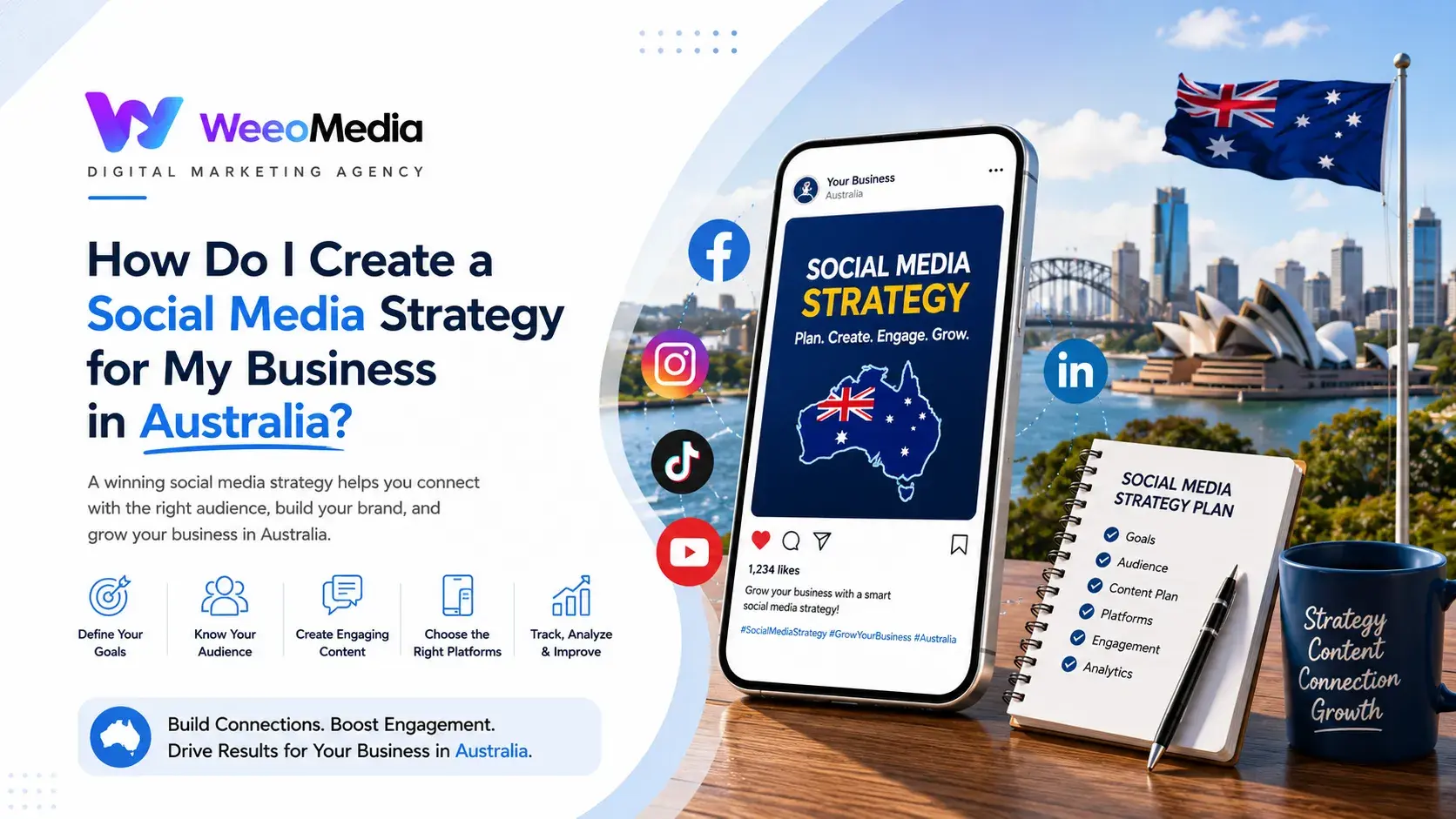
In 2026, social media is no longer simply a place where people share photos and personal updates. It is one of the most powerful and direct channels available to Australian businesses for building brand awareness, engaging with customers, driving website traffic, and generating sales. But the difference between businesses that thrive on social media and those that waste time and budget posting without direction comes down to one thing: strategy.
A social media strategy is not a content calendar. It is not a list of platforms you plan to post on. It is a structured, goal-oriented plan that defines who you are trying to reach, what you want to achieve, which platforms will get you there most efficiently, what content will resonate with your audience, and how you will measure success. Without this foundation, social media activity becomes guesswork, consuming resources without delivering meaningful business outcomes.
Australia's social media landscape in 2026 is dynamic, diverse, and highly engaged. Australians are among the most active social media users in the Asia-Pacific region, with strong adoption across Facebook, Instagram, LinkedIn, TikTok, YouTube, and Pinterest. Each platform attracts a distinct audience with distinct behaviours and expectations. Building a strategy that understands and leverages these differences is what separates businesses that achieve genuine growth from those that post consistently without result.
This guide walks you through every step of creating a social media strategy for Australian businesses that is grounded in your specific business goals, built around your target audience, and designed to deliver measurable returns.
Step One: Define Your Business Goals for Social Media
Every effective social media strategy begins with clarity about what you actually want to achieve. Without defined goals, there is no basis for making decisions about platforms, content, frequency, or budget, and no way to evaluate whether your efforts are working.
Social media goals for Australian businesses typically fall into several broad categories. Brand awareness goals focus on increasing the number of people who know your business exists and understand what you offer. These are particularly relevant for new businesses, businesses entering new markets, and businesses launching new products or services. Lead generation goals focus on attracting potential customers into your sales pipeline through enquiries, sign-ups, downloads, or direct messages. Sales and conversion goals focus on driving direct revenue through social media, either through e-commerce integrations, promoted offers, or traffic to high-converting website pages. Customer retention and loyalty goals focus on deepening relationships with existing customers through consistent engagement, exclusive content, and community building. Reputation and trust goals focus on building credibility and social proof through reviews, testimonials, user-generated content, and transparent brand communication.
The most effective social media strategies typically serve a combination of these goals simultaneously, with different content types and campaign activities addressing different objectives across the same platforms.
Your goals should be specific and measurable. Rather than "increase brand awareness," a well-defined goal states "increase Instagram reach by 40 per cent over six months" or "generate 50 qualified enquiries per month through social media channels by Q3 2026." Specific, measurable goals create accountability and allow you to evaluate performance objectively.
Step Two: Understand Your Target Audience in the Australian Market
Knowing who you are trying to reach is the foundation of every decision in your social media strategy. The more precisely you understand your target audience, the more effectively you can choose the right platforms, create the right content, and invest your budget in the right places.
Audience research for social media in Australia in 2026 goes well beyond basic demographic information like age and gender. A genuinely useful audience profile includes where your audience is located in Australia, whether that is a specific city, region, or national, what platforms they use most frequently and how they use them, what problems, interests, and aspirations drive their online behaviour, what type of content they engage with most, how they prefer to communicate with brands, and what purchasing decisions and triggers are relevant to your product or service.
For businesses serving a local Australian audience, understanding regional differences in behaviour and platform preference matters. Social media usage patterns in regional Queensland differ from those in inner-city Melbourne. A tradie business targeting homeowners in suburban Perth operates in a very different social media context than a luxury fashion brand targeting high-income consumers in Sydney's Eastern Suburbs.
Tools available in 2026 for audience research include Facebook and Instagram Audience Insights, LinkedIn Analytics, TikTok Analytics, Google Analytics audience reports, and social listening tools like Brandwatch, Mention, and Sprout Social. Your existing customer data, including email lists, CRM records, and website visitor analytics, is also an invaluable source of audience intelligence that is specific to your actual customers rather than a generic market estimate.
Creating detailed audience personas, which are fictional but data-informed representations of your ideal customers, helps translate audience data into practical content and platform decisions. Each persona should capture the demographic profile, platform preferences, content habits, pain points, and motivations of a distinct segment of your target market.
Step Three: Choose the Right Social Media Platforms
One of the most common and costly mistakes Australian businesses make with social media is trying to maintain an active presence on every platform simultaneously. The result is typically a spread of mediocre, inconsistent content across multiple channels, none of which builds sufficient depth or engagement to deliver real business value.
A smarter approach is to identify the two or three platforms where your target audience is most concentrated and most receptive to your type of content, and invest in building genuine quality and consistency on those platforms before expanding further.
Choosing social media platforms for Australian businesses in 2026 requires understanding the distinct audience demographics and content dynamics of each major platform.
Facebook remains the most widely used social media platform in Australia across all age groups, with particularly strong penetration among users aged 35 and over. It is effective for local community engagement, event promotion, customer service, targeted paid advertising to specific demographics, and groups that build community around specific interests or local areas. For B2C businesses targeting a broad adult demographic and for local service businesses, Facebook remains a high-value platform.
Instagram is the dominant visual platform in Australia, with strong engagement among users aged 18 to 44. It is particularly effective for businesses with strong visual identities, including hospitality, fashion, beauty, travel, fitness, food, and lifestyle brands. Instagram Reels continues to be the highest-reach format on the platform in 2026, making short-form video an essential part of any Instagram strategy.
TikTok has grown dramatically in Australia and is no longer exclusively a platform for younger audiences. In 2026, TikTok's Australian user base spans a broader age range than in its early years, and the platform's algorithm-driven discovery model gives businesses of all sizes the ability to reach large audiences without an existing follower base. TikTok rewards authentic, entertaining, and educational short-form video content, and businesses that lean into native TikTok formats rather than repurposing content from other platforms see significantly stronger results.
LinkedIn is the essential platform for B2B businesses, professional services firms, recruiters, and businesses targeting corporate decision-makers. For Australian businesses in consulting, technology, finance, legal services, HR, and education, LinkedIn provides direct access to professional audiences in a context where business content is expected and welcomed.
YouTube is the world's second-largest search engine and remains a highly valuable platform for businesses that can invest in longer-form video content. How-to content, product demonstrations, destination guides, educational series, and customer testimonials all perform well on YouTube and have the additional benefit of appearing in Google search results, extending their SEO value beyond the platform itself.
Pinterest is particularly effective for businesses in categories like home design, fashion, food, weddings, crafts, and travel, where users actively search for visual inspiration. Pinterest's search-driven nature makes it more similar to an SEO channel than a traditional social media platform, with well-optimised pins continuing to drive traffic for months or years after publication.
Step Four: Conduct a Competitive Analysis
Understanding how your competitors are using social media gives you valuable intelligence about what is working in your market, where gaps exist that you can exploit, and what standards of quality and frequency you need to match or exceed.
A thorough social media competitive analysis in Australia examines your direct competitors on each relevant platform. For each competitor, assess which platforms they are active on and which they neglect, how frequently they post and what their engagement rates look like, what types of content they publish and which formats generate the most response, what tone and brand voice they use, how they handle customer interactions and comments, and what gaps exist in their content that represent opportunities for your brand to own a distinct position.
Competitive analysis is not about copying what competitors are doing. It is about understanding the landscape so you can make informed decisions about where to differentiate, where to compete directly, and where to focus your energy for maximum impact.
Step Five: Develop Your Content Strategy
Content is the substance of your social media presence. Your content strategy defines what you will create, how often you will publish, what formats you will use, and how your content will serve both your audience's interests and your business goals.
Content strategy for social media in Australia in 2026 needs to account for the significant shift toward short-form video as the dominant organic reach format across virtually all major platforms. Instagram Reels, TikTok videos, and YouTube Shorts consistently generate greater reach and engagement than static image posts or text updates. Any Australian business serious about organic social media growth in 2026 needs to incorporate short-form video as a core content format, not an occasional experiment.
A balanced content mix typically follows a version of the 80-20 principle, where approximately 80 per cent of content provides genuine value to the audience through entertainment, education, inspiration, or community engagement, and approximately 20 per cent directly promotes products, services, or offers. Audiences disengage quickly from feeds that feel like continuous advertising. Providing consistent value builds the trust and affinity that make promotional content effective when it does appear.
Content pillars are a useful framework for organising your content strategy. A content pillar is a broad thematic category that defines an area of focus for your content. A Melbourne restaurant might organise its content around pillars like behind-the-scenes kitchen content, seasonal menu highlights, local supplier stories, dining experience inspiration, and staff personalities. Each pillar contributes to a coherent brand narrative while ensuring content variety that keeps the audience engaged.
User-generated content, which is content created by your customers featuring your products or experiences, is one of the most valuable and credible content types available to Australian businesses. Encouraging and curating customer photos, reviews, unboxing videos, and testimonials provides authentic social proof while reducing the burden of original content creation on your team.
Step Six: Build Your Content Calendar
A content calendar translates your content strategy into a practical, scheduled plan for what will be published, on which platform, on which day, and in what format. It is the operational backbone of consistent social media execution.
Social media content calendar Australia planning in 2026 should be built around several key considerations. Australian public holidays, school holiday periods, and major cultural and sporting events create both posting opportunities and audience behaviour changes that should be reflected in your calendar. The Australian Open, AFL Grand Final, NRL Grand Final, Melbourne Cup, and school holiday periods all represent moments of heightened social media activity and cultural conversation that relevant businesses can engage with authentically.
Seasonal content planning is particularly important for businesses in industries like tourism, hospitality, retail, and outdoor services where demand fluctuates significantly throughout the year. Planning and creating seasonal content in advance, rather than reactively, allows for higher production quality and more strategic execution.
Most social media management tools, including Hootsuite, Buffer, Sprout Social, and Later, allow you to plan, schedule, and publish content across multiple platforms from a single dashboard. Using a scheduling tool significantly improves consistency and reduces the time burden of daily manual posting.
Step Seven: Plan Your Paid Social Media Strategy
Organic reach on most social media platforms in 2026 is limited, particularly for business accounts. Facebook and Instagram organic reach has declined steadily over recent years as platforms prioritise paid content and personal connections in user feeds. Building a realistic social media strategy for an Australian business means accepting that paid amplification is a necessary component for most businesses, not an optional add-on.
Paid social media advertising in Australia offers extraordinarily precise targeting capabilities that allow you to reach specific audiences based on demographics, interests, behaviours, geographic location, and even custom audiences built from your own customer data. For Australian businesses, this means you can target users in specific suburbs, postcodes, or regions; users who have previously visited your website; users who are similar to your existing customers; users who follow your competitors; and users with specific purchase intentions or life events.
Even a modest monthly budget allocated to boosting high-performing organic content, running lead generation campaigns, or promoting time-sensitive offers can significantly amplify the reach and business impact of your social media presence. Starting with a small test budget, analysing what works, and scaling spend toward proven performers is a sensible approach for businesses new to paid social.
Step Eight: Engage With Your Community Consistently
Posting content is only half of an effective social media strategy. The other half is active, genuine engagement with the community that grows around your accounts. Responding to comments, answering direct messages, acknowledging mentions, and participating in conversations related to your industry build the kind of authentic brand presence that algorithms reward and audiences trust.
Community engagement on social media in Australia in 2026 is a key differentiator between businesses that build loyal followings and those that broadcast into a void. Platforms like Instagram, Facebook, and TikTok explicitly reward accounts that generate meaningful interactions, surfacing their content to larger audiences as engagement signals indicate quality and relevance.
Engagement also extends beyond your own accounts. Commenting thoughtfully on industry conversations, engaging with complementary businesses, and participating in relevant community groups build visibility and relationships that drive organic account growth.
Step Nine, Measure, Analyse, and Optimise
A social media strategy that is not regularly measured and refined is not really a strategy; it is a posting schedule. Ongoing performance analysis is what separates strategies that improve over time from those that plateau.
Social media analytics for Australian businesses should be reviewed at least monthly, with key metrics tracked against the specific goals established in step one. Platform-native analytics tools provide data on reach, impressions, engagement rate, follower growth, link clicks, and, where applicable, conversion events. Google Analytics 4 connects social media traffic to website behaviour and conversion outcomes, allowing you to evaluate the full-funnel impact of your social media activity.
The most important question to ask in every performance review is not "how many likes did we get?" but "which content is moving us closer to our defined business goals?" Identifying the content types, formats, topics, and posting times that consistently generate the strongest performance on each platform and systematically doing more of those things is the engine of continuous improvement.
Frequently Asked Questions
How many social media platforms should my Australian business be on in 2026?
For most Australian businesses, focusing on two to three platforms where your target audience is most active delivers better results than trying to maintain a presence across every available platform. The right number depends on your resources, your audience, and your content capabilities. It is far better to be consistently excellent on two platforms than sporadically mediocre on six. Start with the platforms most aligned with your audience and business type, build genuine quality and consistency there, and expand only when you have the resources to maintain standards across additional channels.
How often should I post on social media for my Australian business?
Posting frequency recommendations vary by platform and your available resources. For most Australian businesses in 2026, posting three to five times per week on Instagram and Facebook, daily or near-daily on TikTok if short-form video is part of your strategy, two to three times per week on LinkedIn for B2B brands, and once or twice per week on YouTube if video is a core content format are reasonable starting benchmarks. Consistency matters more than frequency. A reliable schedule of three quality posts per week delivers better results than ten posts in one week followed by silence for two weeks.
Do I need a big budget to succeed with social media in Australia?
No. Many Australian businesses build highly effective social media presences with very modest budgets by focusing on authentic, high-value organic content and community engagement. However, paid social media amplification does significantly accelerate results, particularly on platforms where organic reach is limited. Even a small monthly budget of a few hundred dollars allocated strategically to boosting performing content or running targeted campaigns can meaningfully improve business outcomes. As you validate what works, increasing paid investment in proven content and audiences delivers compounding returns.
Should I manage social media myself or hire an agency in Australia?
This depends on the size of your business, your available time, your content creation skills, and the strategic importance of social media to your growth. Small businesses with limited resources and simple social media needs can often manage their own presence effectively with the right tools and a clear strategy. Growing businesses where social media is a primary customer acquisition channel, or businesses with complex multi-platform strategies and paid advertising requirements, typically benefit significantly from professional management. A middle ground many Australian businesses use successfully is developing strategy and creative direction in-house while outsourcing execution or paid advertising management to a specialist.
How long does it take to see results from a social media strategy in Australia?
Organic social media growth is a medium-term investment. Most Australian businesses running a consistent, well-structured strategy begin to see meaningful engagement growth and community building within two to three months. Measurable business outcomes, such as consistent lead generation or direct sales from social media, typically emerge within three to six months of consistent execution. Paid social media campaigns can deliver faster results, sometimes generating leads and conversions within days of launching, but require ongoing investment to sustain.
What types of content work best on Australian social media in 2026?
Short-form video, particularly Instagram Reels and TikTok content, consistently generates the greatest organic reach across Australian audiences in 2026. Educational and how-to content performs strongly across most platforms and industries, as does authentic behind-the-scenes content that humanises a business and its team. User-generated content and customer testimonials build trust effectively. For B2B brands on LinkedIn, thought leadership articles, industry insights, and professional achievement posts drive strong engagement among professional audiences. The best content for your specific business depends on your audience, your industry, and your brand voice, which is why testing different formats and analysing what resonates is essential.
How do I measure the ROI of social media for my Australian business?
Measuring social media ROI requires connecting platform activity metrics to actual business outcomes. At the most basic level, tracking website traffic from social media through Google Analytics 4 and attributing enquiries or sales to social media sources gives you a direct revenue connection. For lead generation businesses, tracking the number of enquiries generated through social media and their average conversion value provides a clear ROI calculation. For awareness-focused strategies, tracking growth in branded search volume, direct website traffic, and customer survey responses about where they first discovered your business provides proxy measures of awareness impact. Setting up UTM parameters for all social media links and using conversion tracking in Meta and other platform ad managers is essential for accurate attribution.
What are the biggest social media mistakes Australian businesses make in 2026?
The most common and costly mistakes include treating every platform the same and reposting identical content across all channels without adapting it to the native format and audience expectations of each platform, posting without a clear strategy or defined goals and then wondering why results are disappointing, neglecting community engagement by broadcasting content without responding to comments and messages, giving up too early when organic growth does not accelerate immediately, focusing on vanity metrics like follower count rather than metrics tied to real business outcomes, and underinvesting in video content when short-form video is consistently the highest-reach format across all major platforms in 2026.